

One of the most effective ways to manage our emotions is to soothe each of the five senses: vision, hearing, touch, smell, and taste. Self-soothing is a powerful strategy for helping us feel calm and grounded. Unfortunately, most of us forget to self-soothe or never learned to self-soothe as children. The good news is that we can learn to self-soothe now and it’s never too late to improve our skills.
I encourage you to experiment with different self-soothing techniques. When you find techniques that are helpful, set a goal to practice them each day even if you do not feel anxious. Get in the habit of self-soothing regularly and when strong emotions strike you will feel well-prepared to manage them.
Below you will find ways to soothe emotions with the five senses. Identify your favorite ways to self-soothe or create your own strategies. Keep your favorite self-soothing techniques on your phone and on your computer. Print out your list on colorful paper and keep it somewhere you can see, such as on your closet door or refrigerator.

How to Self-Soothe the Five Senses
VISION: Notice what you see, and find soothing things to look at.
- Look up at the sky and notice the beautiful colors.
- Look out the window and watch the grass gently blowing in the breeze, the sun dancing on leaves, the graceful movement of the birds, or the moon and stars in the night sky.
- Notice the play of light on the walls.
- Enjoy the richness of colors at your office or home.
- Go to a beautiful place or sit in your backyard to enjoy everything you see.
HEARING: Pay attention to what you can hear around you.
- Listen to beautiful or soothing music, or to invigorating and exciting music.
- Pay attention to nature sounds (waves, birds, rainfall, leaves rustling) or listen to sounds of nature on your computer or phone.
- Sing to your favorite songs or hum a soothing tune.
- Learn to play an instrument.
- Be mindful of any sounds that come your way, letting them go in one ear and out the other.
- Quietly notice the sounds of your own breath.
TOUCH: Find comfort in touch.
- Take a hot bath.
- Soak your feet.
- Put a cold compress on your forehead, or a heating pad on your back.
- Place your hand on a smooth, cool surface.
- Enjoy the feeling of a favorite piece of clothing.
- Savor the feeling of crisp, clean sheets on the bed.
- Notice the comforting warmth of clothing that is fresh from the dryer.
SMELL: Be aware of the memories that smell can bring.
- Purchase your favorite soap and shampoo, and notice the scent when you shower or bathe.
- Try to find brands of lotion that have a soothing smell.
- Enjoy the smell of your food or when you cook or bake. See if you can smell each type of food individually.
- Savor the smell of popcorn and remember other times in your life when you have enjoyed popcorn.
- Smell essential oils such as lavender or peppermint oil, or burn incense and breath in the scent to shift your attention.
- Purchase fresh flowers or add fragrant flowers to your garden.
TASTE: Carefully savor flavors of food or drinks; eat one thing mindfully.
- Eat a healthy meal.
- Enjoy your dessert.
- Have a favorite soothing drink such as herbal tea or hot chocolate.
- Treat yourself to a favorite snack.
- Enjoy a piece of candy or chew your favorite gum.
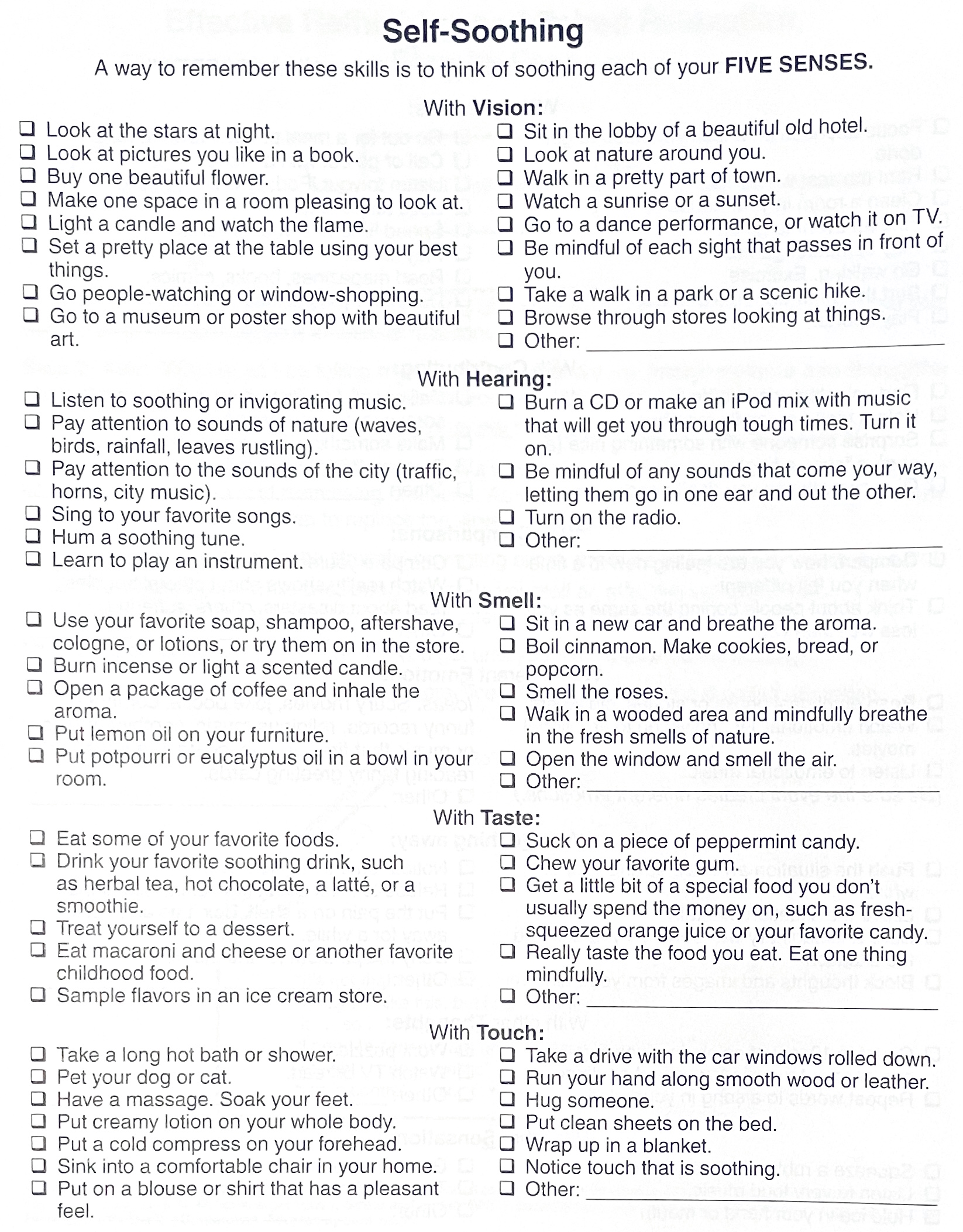
Self Soothing Checklist
Below is a comprehensive checklist of self-soothing activities.
Final Thoughts
Soothing emotions is a powerful way to help your mind and body return to a balanced state. By engaging the five senses, you can calm your nervous system, lower emotional intensity, and create a sense of safety when stress or strong feelings arise. Over time, practicing these techniques helps build resilience, making it easier to stay grounded and think clearly during difficult moments.
Rather than saving self-soothing only for times of crisis, try building it into your everyday routines. The more familiar these practices become, the more naturally you’ll be able to use them when you need them most.
🌿 Additional Resources
- 3 Ways to Tolerate Stress and Anxiety — Learn simple, practical tools to help you stay steady when stress or anxiety feels overwhelming.
- Ice Packs for Anxiety — Discover how using cold sensations can quickly interrupt anxiety spirals and calm your nervous system.
- 7 Grounding Techniques to Calm the Mind — Try these sensory-based strategies to anchor yourself in the present moment when emotions run high.
- How to Take Hold of the Mind — Explore techniques from DBT that help you regain control when your thoughts feel scattered or racing.
- Putting Mindfulness to Work — Learn how to weave mindfulness into your daily tasks to reduce stress and increase emotional resilience.
About the Author
Dr. Christine E. Dickson is a licensed clinical psychologist (CA PSY20050) who provides therapy and coaching to adults and adolescents throughout California. With Dual PhDs in Clinical and Industrial-Organizational Psychology, she specializes in evidence-based approaches such as Cognitive Behavioral Therapy (CBT), Dialectical Behavior Therapy (DBT), and mindfulness-based practices to help clients build emotional regulation skills, reduce anxiety, and recover from burnout.
To learn more or work with Dr. Dickson, complete the contact form.


Leave a Reply