

Grounding techniques are simple strategies that help people cope with difficult emotions like anxiety, depression, or trauma. They work by pulling your focus into the present moment. When you use your senses to connect with the here and now, your mind and body begin to relax. This shift reduces the intensity of overwhelming emotions and creates a sense of calm.
Why Use Grounding Techniques?
Anxiety, depression, and trauma can be extremely challenging to manage. They can cause physical symptoms such as heart palpitations, sweating, and trembling. They can also make it difficult to think clearly or make decisions. Grounding techniques can help you manage these symptoms by bringing your attention back to the present moment, and away from distressing thoughts and feelings.
How to Use Grounding Techniques
- Focus on your breath: Breathing is a powerful grounding technique that can help you feel calmer and more centered. Take a deep breath in through your nose, hold it for a few seconds, and then exhale slowly through your mouth. Repeat this a few times until you feel more relaxed.
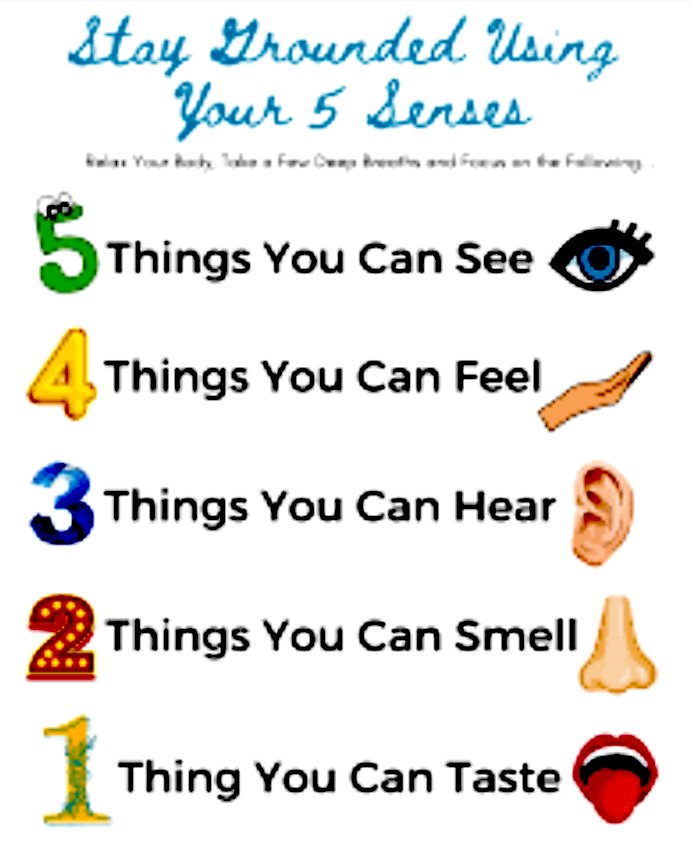
- Use your senses: Engaging your senses can help you stay present and connected to the world around you. Try to notice five things you can see, four things you can touch, three things you can hear, two things you can smell, and one thing you can taste.
- Practice mindfulness: Mindfulness is the practice of being present in the moment, without judgment. You can practice mindfulness by focusing your attention on your breath, your body, or your thoughts. If you notice your mind wandering, gently bring your attention back to your chosen focus.
- Use positive affirmations: Positive affirmations are statements that you can repeat to yourself to help you feel more calm and confident. Choose a phrase that resonates with you, such as “I am strong” or “I can handle this,” and repeat it to yourself when you’re feeling anxious or overwhelmed.
- Connect with your body: Sometimes, when we’re feeling anxious or depressed, we disconnect from our bodies. You can reconnect by doing a body scan, where you focus your attention on each part of your body in turn, and notice any sensations you feel.
- Use guided imagery: Guided imagery is a technique where you imagine a calming or peaceful scene in your mind. You can use a recording or an app to guide you through the process, or you can create your own script.
- Practice grounding exercises: Grounding exercises involve using your senses to bring yourself back to the present moment. You can try standing up and feeling the ground beneath your feet, or holding a cold object in your hand and noticing how it feels.
When to Use Grounding Techniques
Grounding techniques can be used in a variety of situations, such as when you’re feeling overwhelmed by emotions, when you’re experiencing a panic attack, or when you’re feeling triggered by a traumatic memory. They can also be used as a preventative measure, by practicing them regularly to build your resilience and coping skills.
Example: How to Apply Grounding Techniques
Samantha is a 27-year-old woman who has been experiencing anxiety for several months. She often feels overwhelmed and finds it difficult to focus on her work or enjoy time with her friends. Samantha has started seeing a therapist who has taught her several grounding techniques to help manage her anxiety.
One day, Samantha is at work and feels a wave of anxiety coming on. She notices her heart racing and her palms sweating, and she starts to feel a sense of panic. Samantha remembers the grounding techniques her therapist taught her and decides to try a few.
First, Samantha takes a few deep breaths and focuses on her breath, inhaling deeply through her nose and exhaling slowly through her mouth. She notices her heart rate starting to slow down and her breathing becoming more regular.
Next, Samantha uses her senses. She looks around the room and notices five things she can see: her computer screen, the clock on the wall, the picture on her desk, the window, and her phone. She touches four things she can feel: the texture of her desk, the smooth surface of her computer mouse, the weight of her pen, and the warmth of her coffee mug. She listens for three things she can hear: the sound of her colleague typing, the hum of the air conditioning, and the sound of cars outside. She smells two things: the scent of her coffee and the smell of her hand lotion. Finally, she tastes one thing: the lingering flavor of the mint she had after lunch.
Samantha then practices mindfulness. She brings her attention to her breath and focuses on the sensation of air moving in and out of her nostrils. She notices her thoughts, but gently lets them pass by without getting caught up in them. For more information please read my post, 7 Techniques for Practicing Mindfulness.
Finally, Samantha uses positive affirmations. She repeats to herself, “I am strong,” “I can handle this,” and “This feeling will pass.” She imagines herself feeling calm and confident, and reminds herself that she has the skills to manage her anxiety.
After a few minutes of practicing these grounding techniques, Samantha feels much more centered and grounded. Her anxiety has decreased, and she is able to focus on her work again. Samantha is grateful for the tools her therapist has taught her and knows she can use these techniques whenever she needs them.
Final Thoughts
Grounding techniques are a powerful tool that can help you manage difficult emotions and symptoms of anxiety, depression, and trauma. By practicing these techniques regularly, you can build your resilience and coping skills, and improve your overall mental health and wellbeing. Remember, grounding techniques are just one tool in your mental health toolkit, and it’s important to seek professional support if you’re struggling with a mental health condition.
About the Author
Dr. Christine E. Dickson is a licensed clinical psychologist (CA PSY20050) with dual PhDs in Clinical and Industrial-Organizational Psychology. She has more than 25 years of experience helping adults, teens, and families manage anxiety, trauma, depression, and stress through evidence-based therapies like CBT, DBT, and mindfulness. In addition to her private practice, she writes articles that translate complex psychology into practical tools for everyday life.
If you’d like to learn more or work with Dr. Dickson, please go to her contact page.

Leave a Reply