
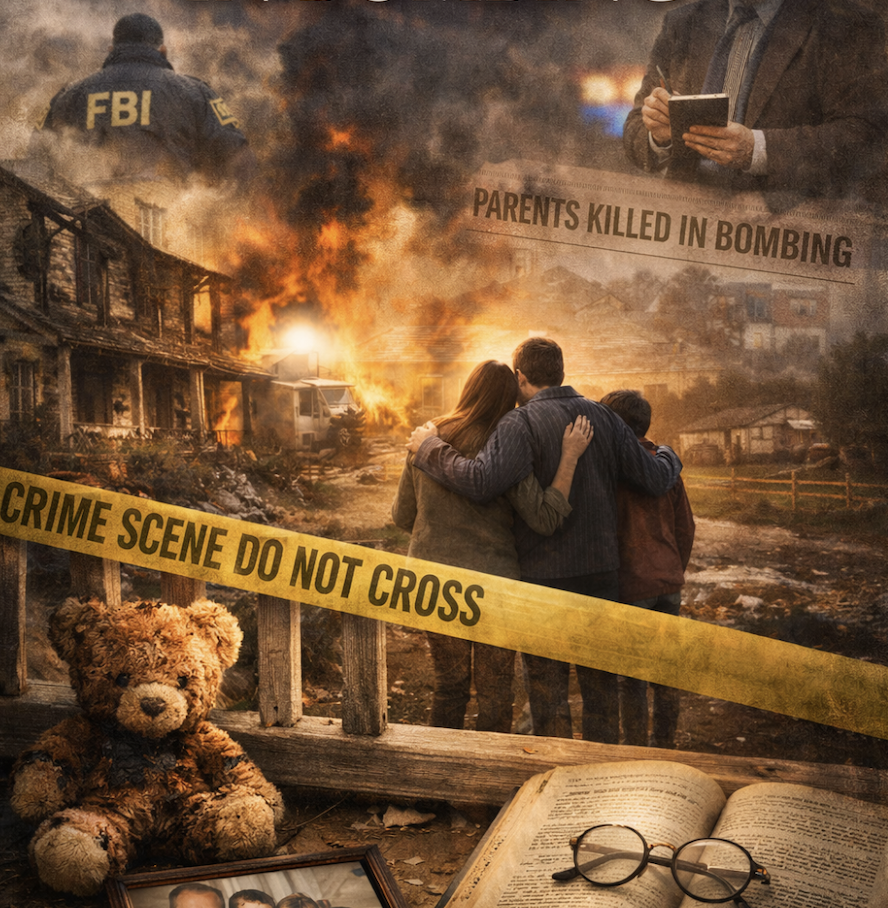
As a child, my idyllic American neighborhood was shattered by an unsolved violent crime that took the lives of close family friends and nearly took the lives of their three young children. It left my family under FBI protection for years. There were no answers. No closure. No clear assurance of safety.
What followed could have been defined by fear— but instead my family chose faith over fear, structure over chaos, love over hate, and meaning over despair.
We refused to let violence determine who we would become. We refused to surrender our identity to something evil and incomprehensible. We chose—again and again—to live with intention and to focus on what we could control. That choice did not begin after the tragedy. It began long before.
This is a story of tragedy and resilience that begins with love and ends with love.
I was lucky to grow up in a loving family. My parents were amazing people. My mother initially stayed home to care for my brother and me but later became a tax professional, and my father had a master’s degree in chemistry and worked for 30 years as a chemist for a Swiss pharmaceutical company. My parents moved next door to my equally amazing grandparents when I was 5-years-old.
I describe my Polish-German grandparents as loving and psychologically stable versions of Martha Stewart’s high-driving parents. They were very kind, encouraged excellence—not perfection—and always worked as a team restoring old furniture, gardening, sewing, cooking, canning, building, crafting, and creating. My grandmother had a bike with a large basket and would ride around the neighborhood giving away flowers from her garden, simply to brighten the day of her neighbors. Homemade cookies and cakes were regularly exchanged among neighbors, and when someone was sick they were taken care of. That was how our neighborhood worked.
I spent a lot of time with my grandparents because of their DIY creative spirit, which I admired deeply. But I also admired my mother and father for their professional pursuits. Since my grandparents lived in a working-class neighborhood and my parents wanted to move next door, my father paid cash for a small house directly next to my grandparents. He could have easily afforded a house in an upper-class neighborhood, but my parents enjoyed the close-knit connections, down-to-earth people, safety, and endless support of my grandparents.
My parents were active in the community, volunteering at the church, and my grandparents volunteered at the local food bank. When I look back at my early childhood, it was idyllic. I never felt unsafe. At seven years old, I would walk to the corner grocery store with my neighbors peeking out their windows or stepping onto their front porches to say hello. My neighborhood was full of large oak trees, flower gardens, wide roads, and a nature preserve with a creek at the end of the street. It was a true oasis for children.
So when tragedy struck, it was shocking.
My quintessential American town founded in 1913 never experienced a violent crime in its history. But on February 25, 1982, a killer targeted an entire family—both parents and three children. My parents’ close friends, Andrew and Patricia Puskas were murdered when a gasoline-fueled pipe bomb disguised as a package was delivered to their home. Their three children barely escaped.
Andrew and Patricia were warm, kind and thoughtful people who helped their neighbors, and volunteered in the community just like my parents and grandparents.
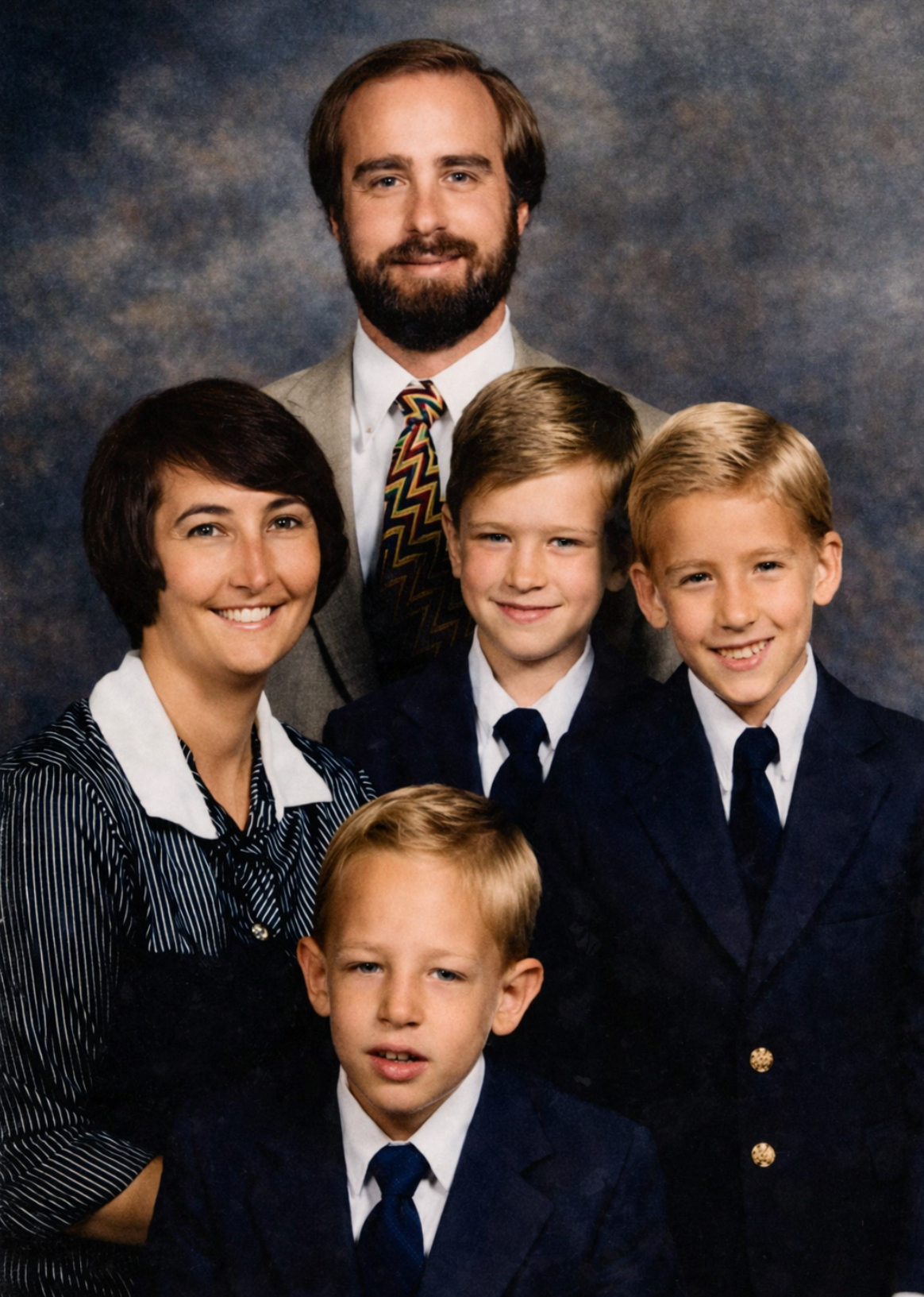
Andrew was on his way, with his three children—ages 3, 7, and 9—to pick me up for school. All four of us attended a local Christian Academy. On their way out of the house, the children found a package on the front lawn addressed to Andrew, their father. He brought it inside and left it with his wife because he was leaving for work and taking us to school. He was in the car, about to drive away, when his wife asked him to come back inside.
My nine-year-old friend and his seven-year-old brother went back into the house with their father, while the three-year-old stayed in his car seat. Patricia had opened the package and was concerned about its contents. My nine-year-old friend and his seven-year-old brother had looked at it as well. Andrew thought the package might be a practical joke, but he was concerned enough to call the police. The package was approximately two feet long and contained a kitchen egg timer that was not ticking, two glass bottles, and wires.
Andrew told his boys to go wait in the car with their three-year-old brother. While he was on the phone with the police, I called their house to find out why they were late. They lived about three blocks away. I remember hearing a busy signal on the phone. I called again a few minutes later and heard another busy signal.
The boys were outside the front door, and Andrew had just finished speaking with the police when the house exploded with such force that the roof blew off. My two friends were thrown off the front porch, shielded by the front door as the explosion erupted behind them. They were injured, burned and bruised, but they survived, and their three-year-old brother remained safe inside the car.
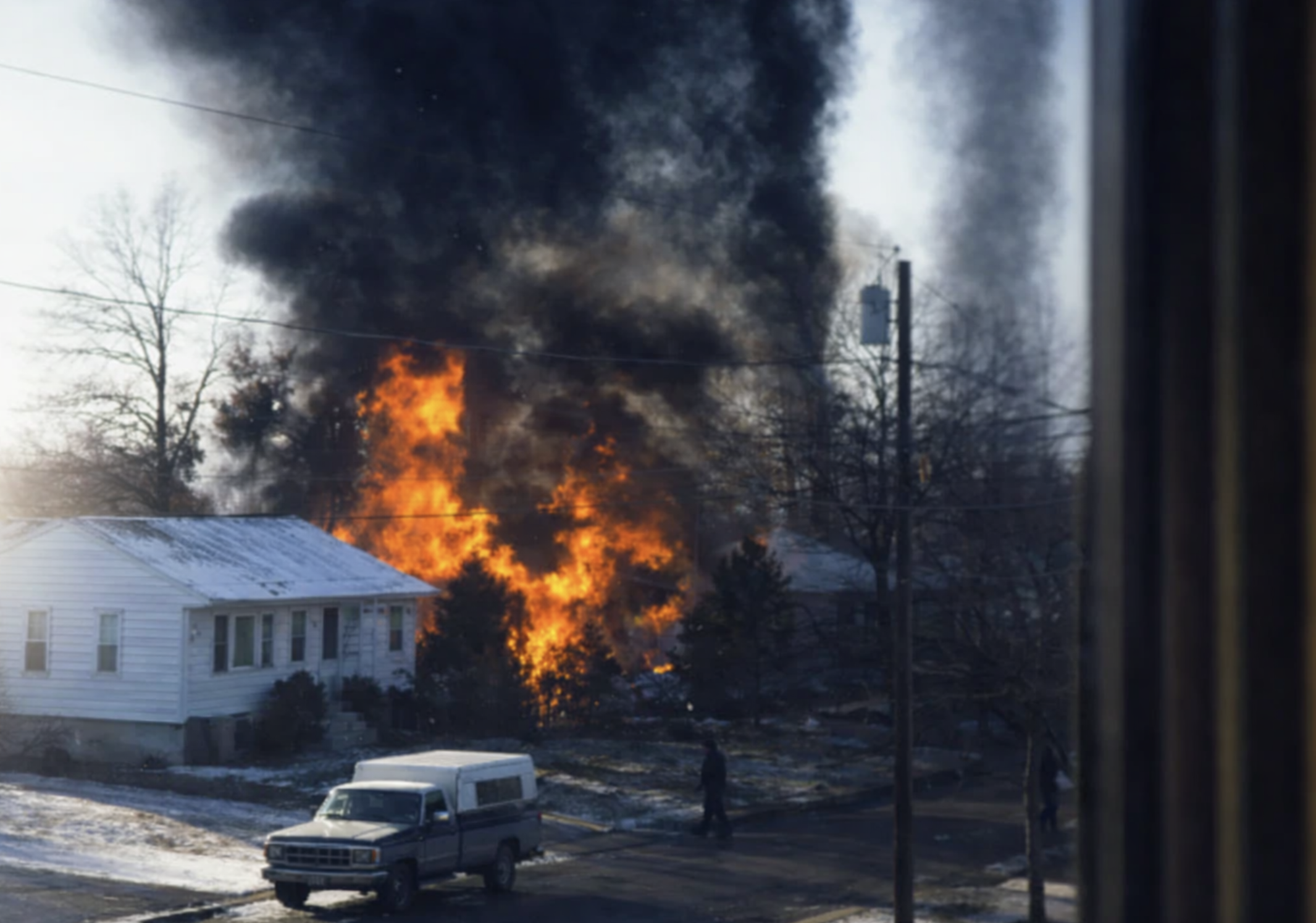
The FBI became involved almost immediately alongside local police to investigate the crime. Because my parents were close friends with the family and it was Andrew’s week to take me to school in the carpool that he shared with my mother—police were very concerned about our safety and whether we would be the next target. The FBI placed us under protection and wire tapped our home phone for over three years.
The most difficult part of this tragedy was that no motive was ever found for the crime, and the murderer was never caught. As of 2026, it is still a cold case homicide.
So the question is: how do you live after a tragedy like this when there is never any clarity about your safety? When you are grieving not only the loss of your neighbors– who were like a second family to you– but also watching their surviving children taken far away? When your town is forever changed by violence?
How does a close-knit community of 14,000 people live in the shadow of a violent crime that targeted both parents and children, with the murderer never caught?
I cannot answer all of those questions. I can only answer what happened to me.
Because I already had amazing parents, grandparents, and neighbors, we came together to support and love each other.
People would say, “You never let the criminal win. You aggressively and intentionally focus on what you can control and what you have power over.”
When I found the work of Viktor Frankl, concentration camp survivor and author of Man’s Search for Meaning, at 18 years old, I realized my family, many of my neighbors and school teachers had been practicing the teachings of that book without even knowing it. “Everything can be taken from you but the last of human freedoms is to choose one’s own attitude.” Regardless of external circumstances, even in severe adversity, individuals retain the ultimate power to determine their internal response and find meaning in life.
This was the overarching principle that drove our resilience.
Since we were not sure if the government could protect us, we protected our minds, our physical health, and each other with support and love. We prayed. We grew closer to one another. People around me did not act out of control in those horrific circumstances. Instead, they focused on what they could control by creating a stable home, encouraging play and creativity, and maintaining structure.
As time passed we created a meaningful life and continued moving forward regardless of the violence that may await us.
Although I changed schools due to safety concerns, I still went to school. I still studied. I still earned straight A’s. I read, played, and spent time doing creative projects with my grandparents. I exercised at home doing gymnastics in the basement. We still had dinner every evening at the same time, just as we had my entire life. We held hands and prayed, thanking God for our blessings. We practiced gratitude in the face of adversity. Everyone was just as supportive and loving as ever.
- We never gave up.
- We never felt defeated.
- We did not let evil win.
- We did not let a criminal have power over us.
- We never gave up hope.
- We refused to live in fear.
- We did not stop our lives.
We did not change who we were, not for anything, not for anyone, not for any circumstance.
And that is how I survived trauma.
When I found psychology in high school, I knew I had found my calling. It was not because I was trying to figure out my problems or even what made a murderer tick—though I never did figure that out. It was to help others and to teach the resilience that I had learned as a child.
My family always said, “Where there is a will, there is a way.” “You are a powerful person, not a victim of circumstances.” And later I would read, “You have power over your mind, not external events. Realize this, and you will find strength.” — Roman Emperor and Stoic Philosopher, Marcus Aurelius. 161 AD
Author’s Note
I still speak at least twice a month to my childhood friend who lost his parents. Every time I hear his voice and know he is okay, a deep sense of relief comes over me even now. He remains one of my greatest inspirations, and he and his brothers have each built meaningful lives, using many of the same tools of resilience we learned in our early childhood.
Additional Reading
A Framework for Trauma Recovery
About the Author

Dr. Christine E. Dickson, PhD, is a licensed clinical psychologist (Lic.# PSY20050) in San Francisco with more than 25 years of experience. As a child, her idyllic American neighborhood was shattered by an unsolved violent crime that claimed the lives of close family friends and nearly took the lives of their three young children. It left her family under FBI protection for years. In the absence of answers or closure, her family chose faith over fear, structure over chaos, love over hate, and meaning over despair.
Her story is not about surviving tragedy. It is about refusing to let violence define identity, refusing to surrender to fear, and choosing—again and again—to live with intention.
Today, Dr. Dickson dedicates a portion of her practice to individuals recovering from childhood trauma as well as professionals affected by acute critical incidents. Over the course of her career, she has conducted critical incident stress debriefings for police officers, firefighters, and transit workers throughout the San Francisco Bay Area, and has helped more than one hundred employees from Bay Area Rapid Transit (BART) and AC Transit recover from workplace trauma.
She has also worked with Wells Fargo Corporate Headquarters to design and implement a robbery-response protocol to support employees and managers following bank robberies and other workplace crises. Provided psychological services through the Office for Victims of Crime, and directly following the events of September 11, 2001, she worked with members of the U.S. Navy and Marine Corps to help manage the psychological stress associated with the attacks and the transition to wartime deployment.
To reach out or make an appointment with Dr. Dickson, please go to her contact page.
Official Website: christinedickson.com
Written by Dr. Christine E. Dickson, PhD – Licensed Clinical Psychologist


Leave a Reply